

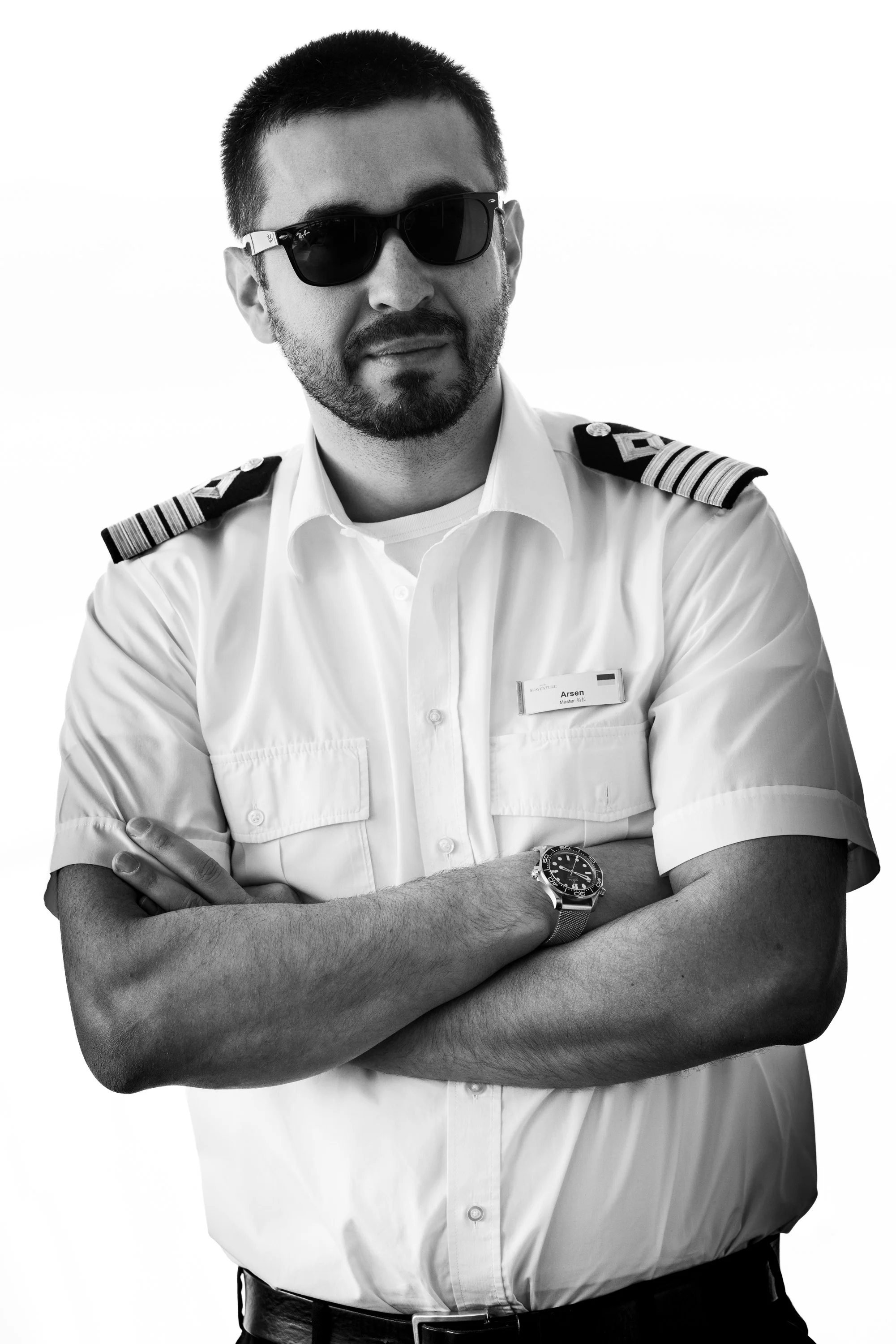
From the bridge of SeaVenture, I couldn’t see a way through.
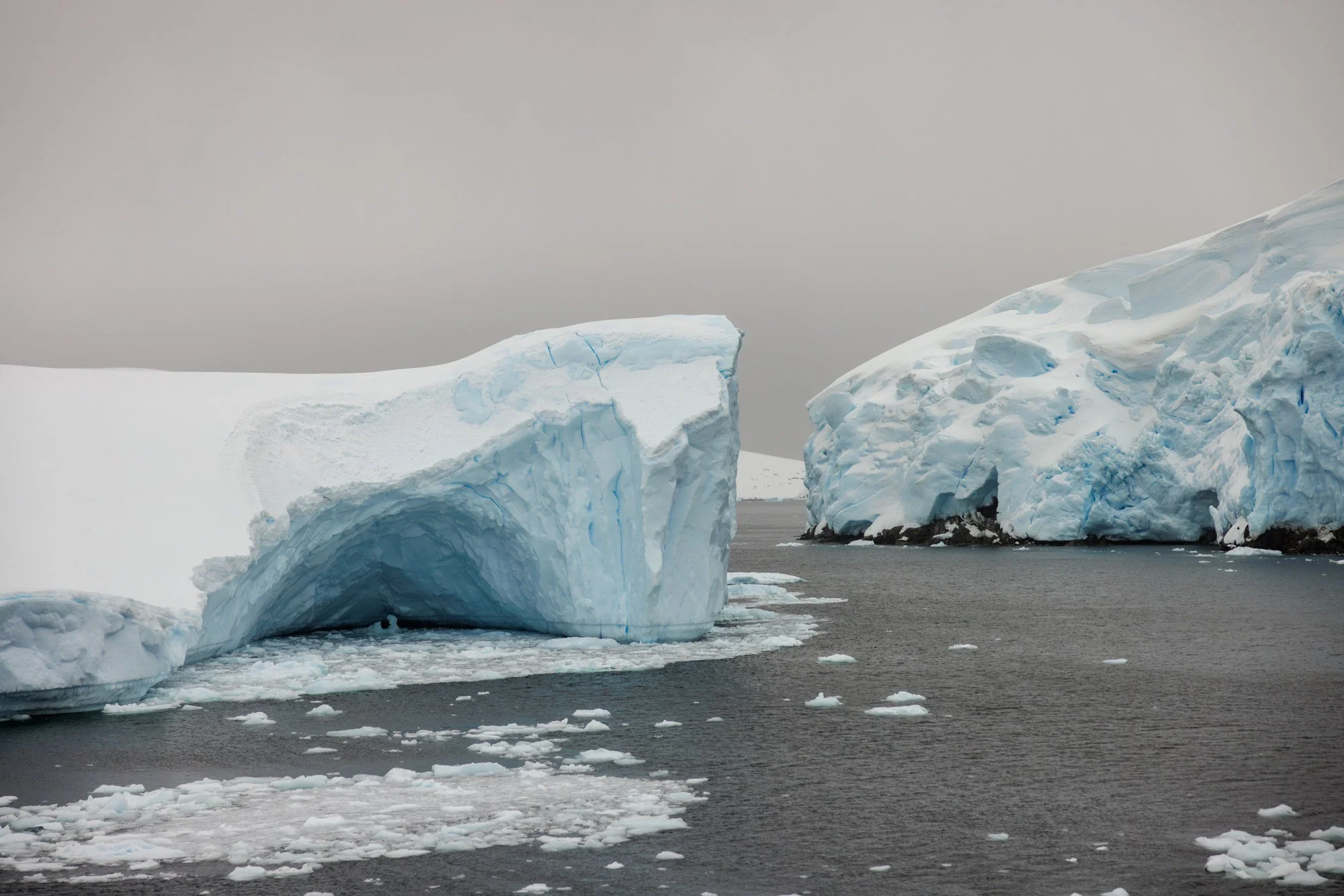
We were heading north through the Lemaire Channel. Looking at the ice ahead, I couldn’t work out how the ship would fit. I made a photograph of Captain Arsen Prostov looking out through the bridge windows, with an iceberg filling the view. When I look at it now, what I remember is the proximity. The ice was right there.
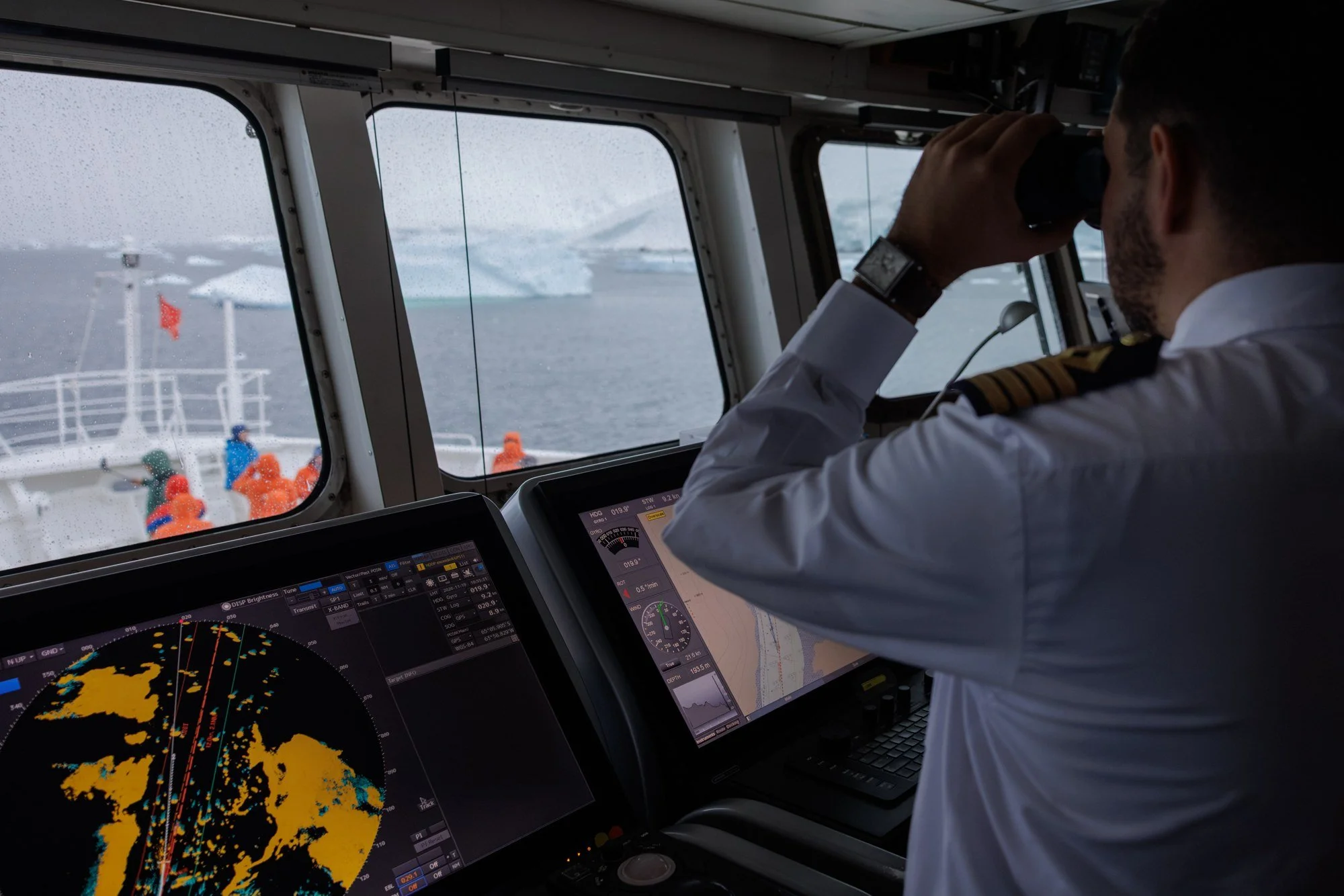
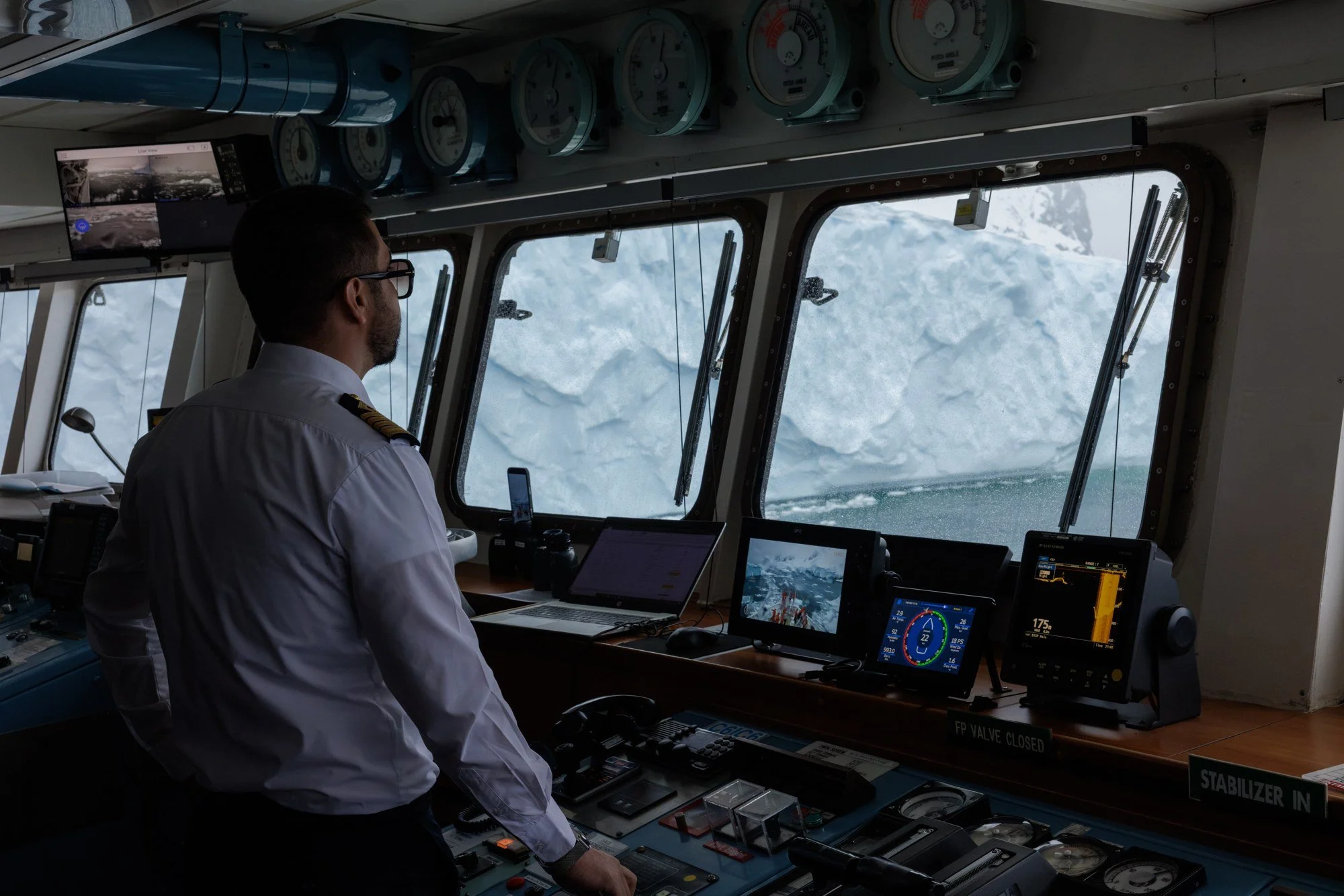
Arsen seemed relaxed. Around him, officers were moving from port to starboard, checking the clearance on each side. From where I stood, the route still wasn’t obvious.
Watching from the bridge, I could see how much movement the passage required. The ship shifted sideways under thruster power and swung around the larger pieces. Getting the bow through was only part of it; there also had to be room for the stern to swing. Officers kept checking along both sides as the ice passed the wheelhouse and moved astern.
The commands were clear, and each was repeated back. That rhythm stayed with me: an instruction, its repetition, another check outside. With no single view giving the whole picture, those exchanges helped everyone understand what was being asked and what was clear. I wouldn’t describe the atmosphere as anxious. It was focused coordination, led by someone who seemed entirely familiar with how this ship moved.
Often, I’ve watched us move through ice, pushing pieces aside so gently that I feel no contact from aboard the ship. This transit felt different. The thickness of the ice made the passage particularly challenging. It was windy, and visibility wasn’t always good. I would have liked to fly the drone, but in those conditions it wasn’t possible.
At one point, we passed very close to a particularly large piece of ice and it struck the hull. I felt the shudder through the ship and heard a deep, resonant sound, like the ringing of a bell, but lower.
People glanced around, seeming to check that everything was all right. Arsen was still there at the window, composed. I took the photograph within perhaps 30 or 40 seconds of that contact. When I look at his expression in the frame, I remember how steady he seemed while the rest of us registered what we had just felt.
That stayed with me. We were moving slowly, yet I could feel the force of the contact from inside the bridge. It brought home how substantial the ice was, and how dangerous it could be if handled badly. Watching it through a window had given me one sense of its scale. Feeling it through the hull gave me another.
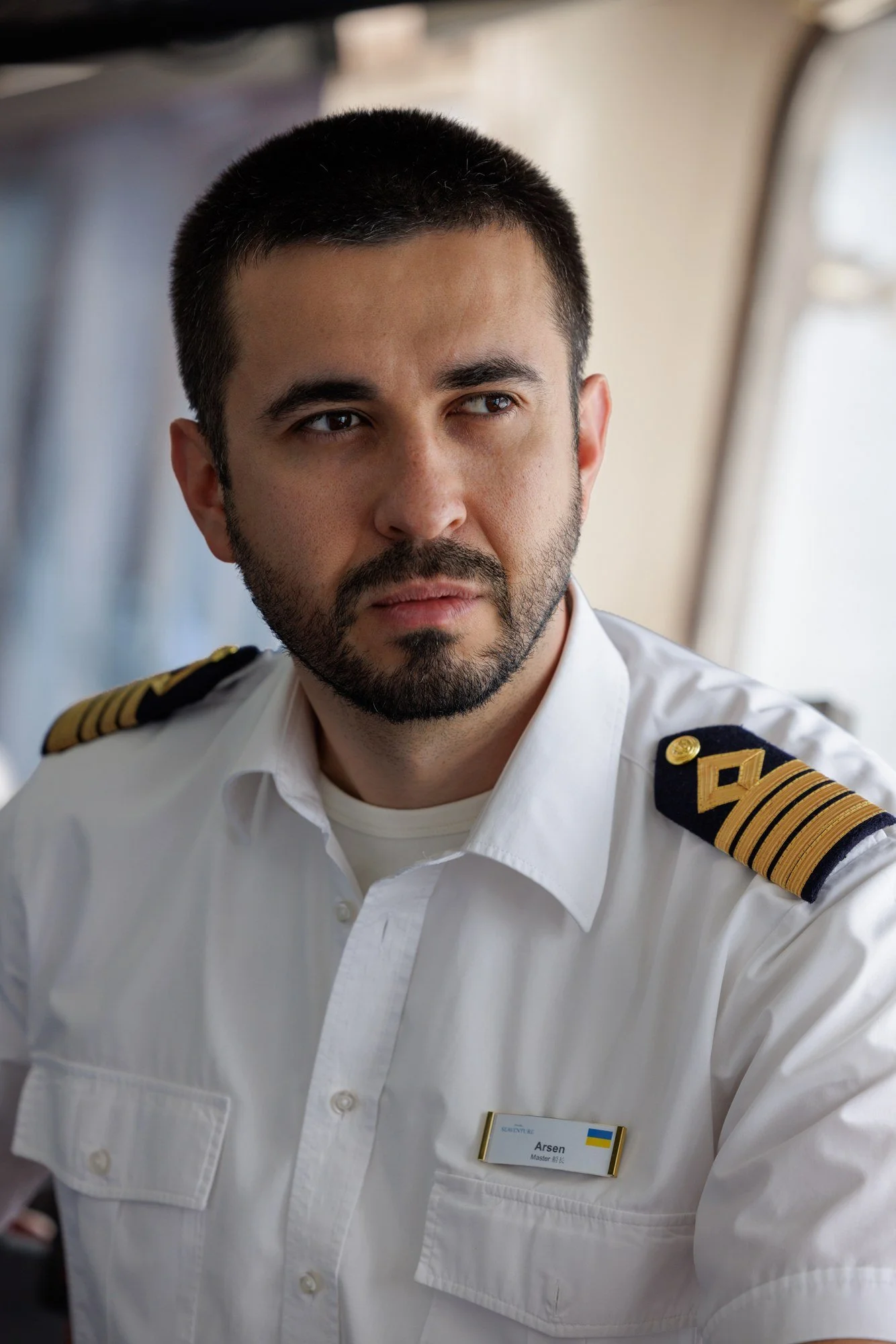
Later, before Arsen headed home, I asked him whether there had been a moment on this voyage when he had looked through those windows and thought: that’s incredible.
He went straight to the Lemaire.
He remembered a large iceberg, smaller growlers and current. The navigation had been challenging, he said, and at the same time extremely beautiful. I had wondered how we would get through. He had been taking the ship through while appreciating the same scene.
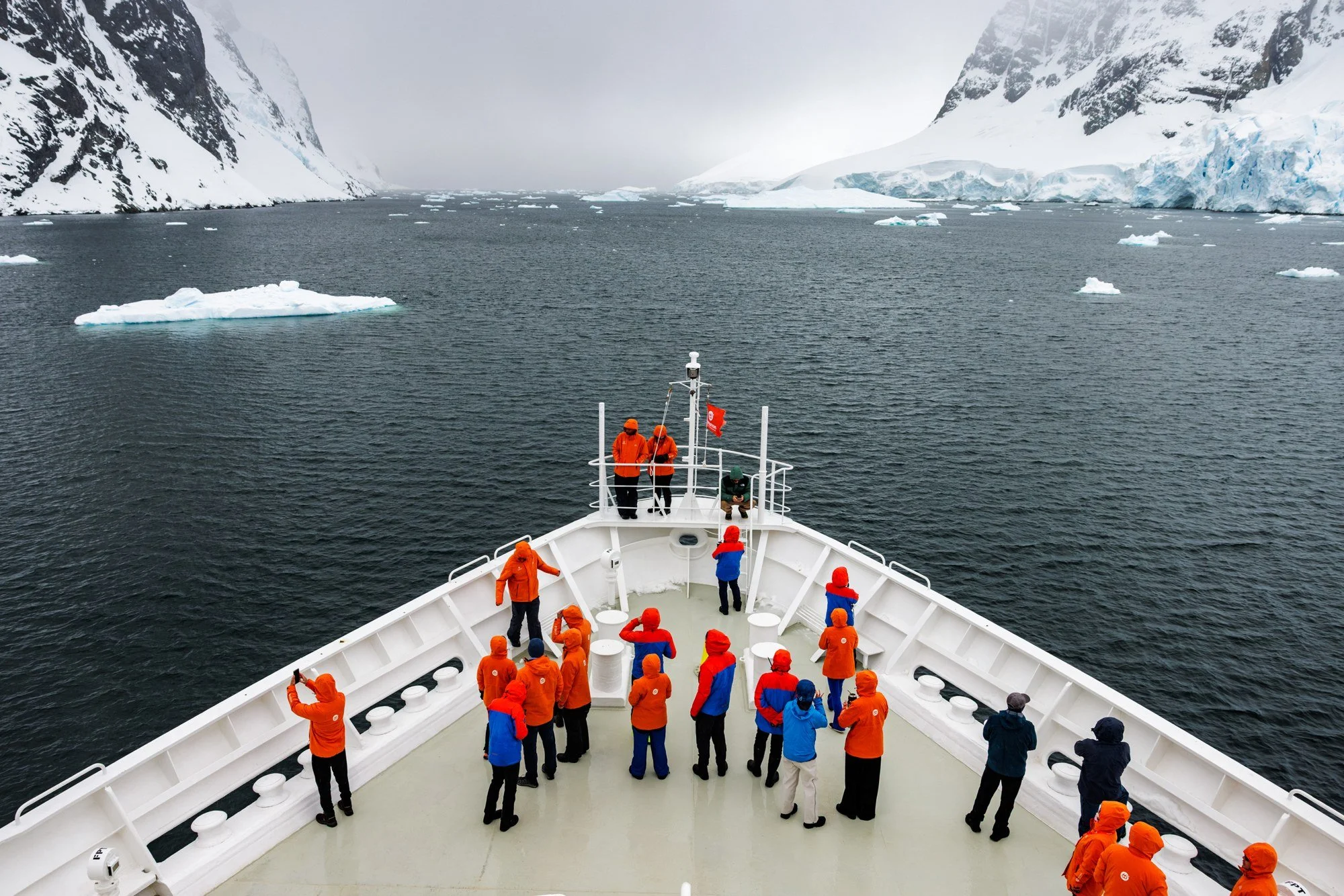
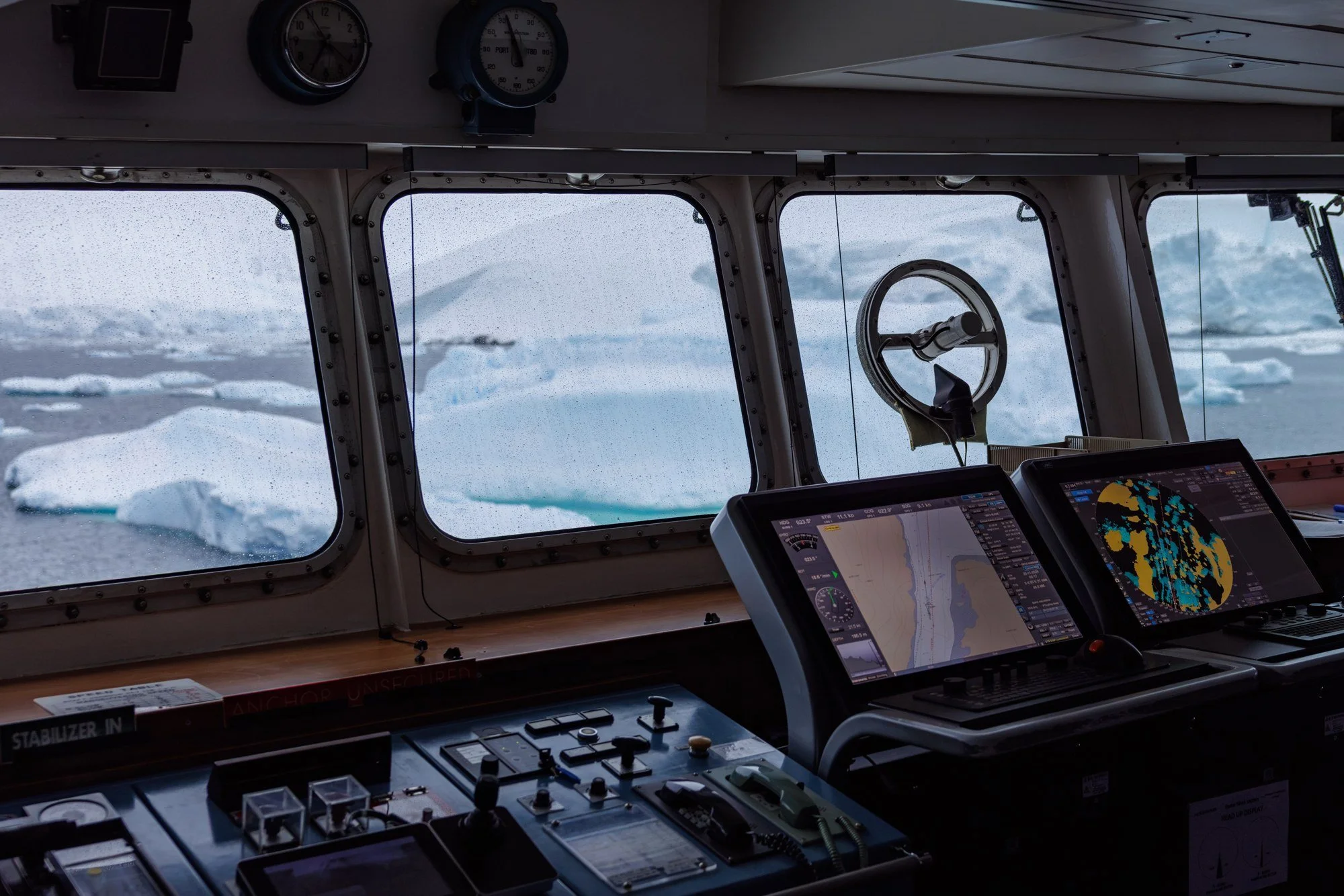
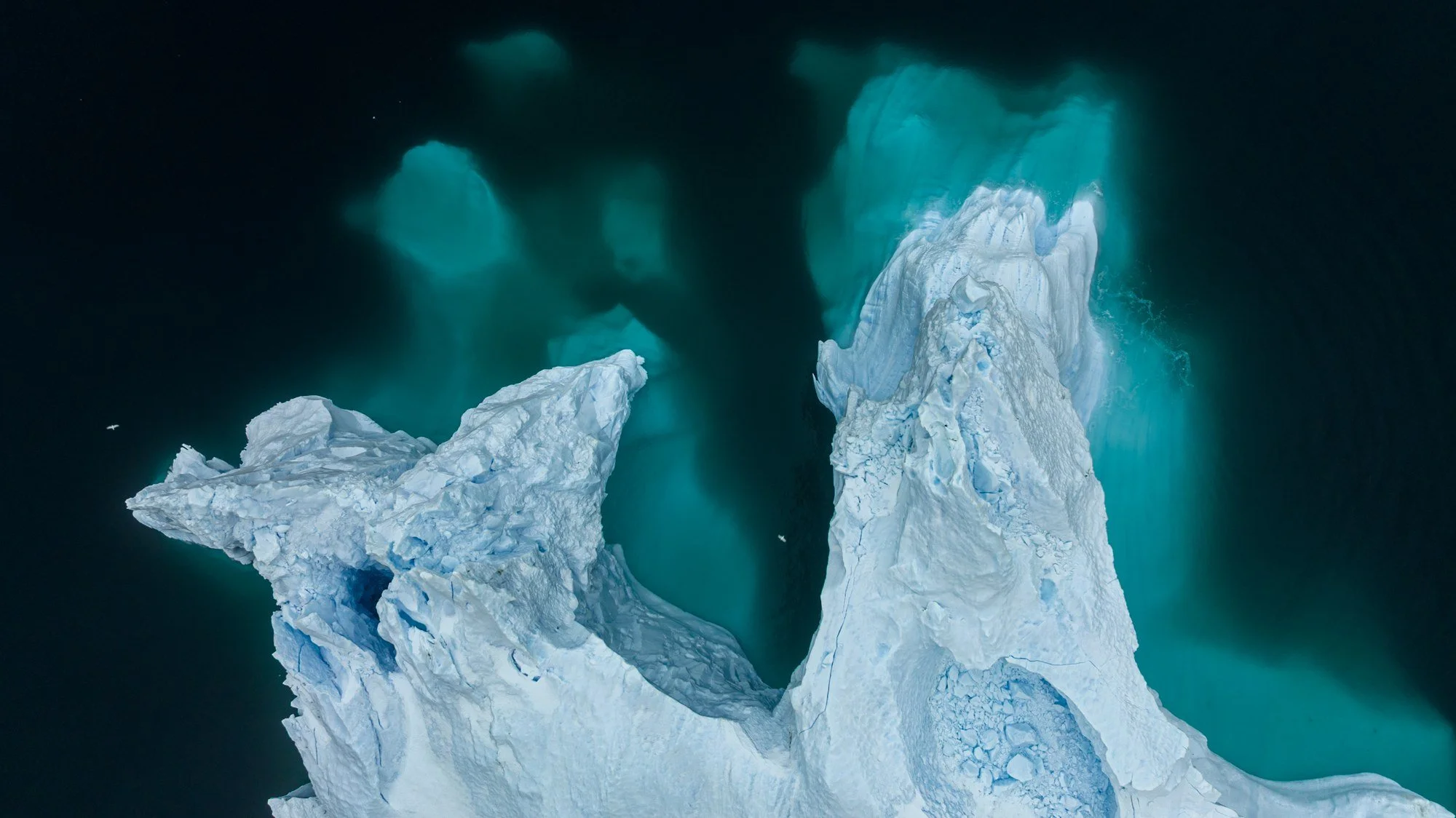
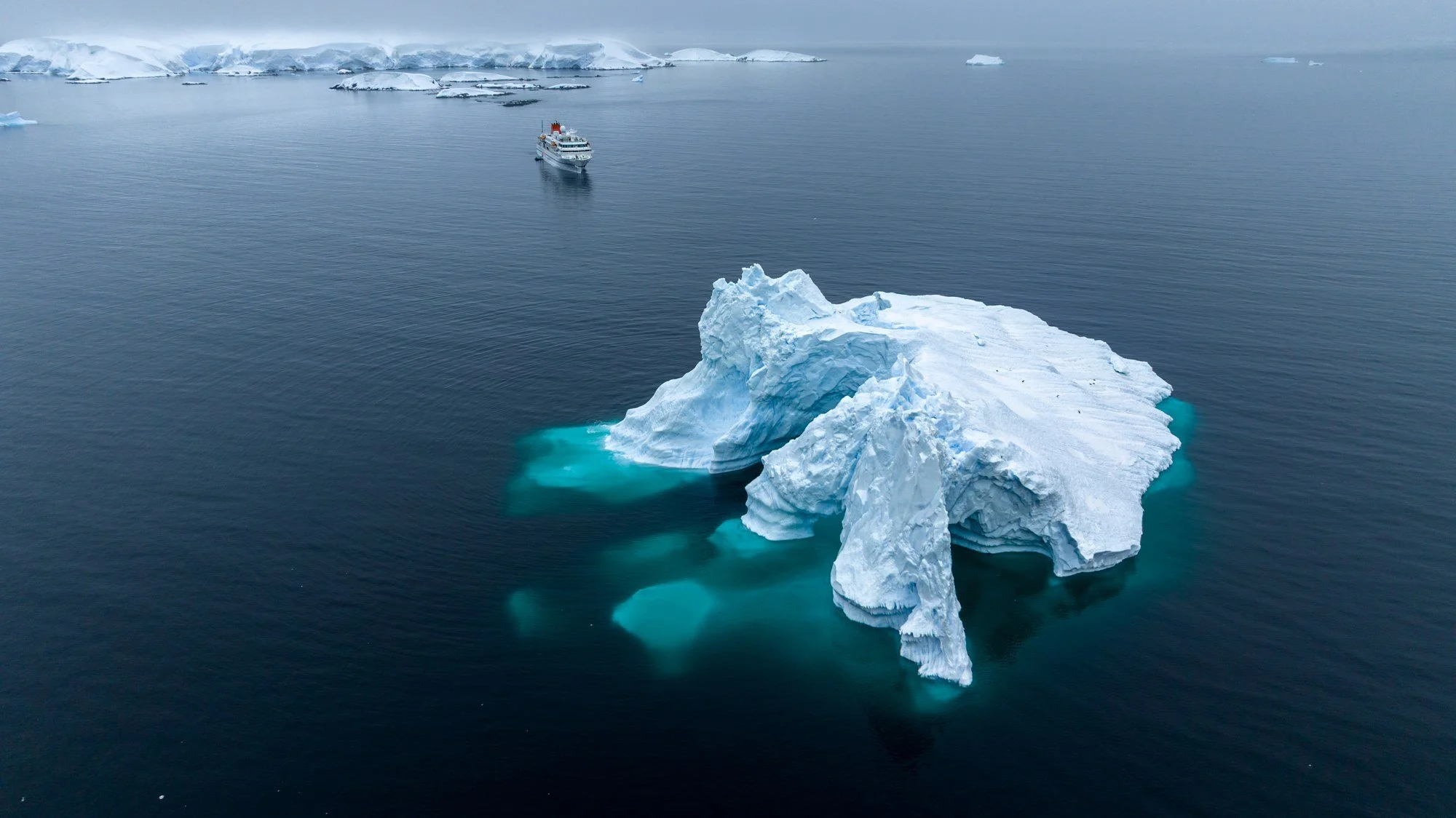
The aerial photographs in this story were made at Enterprise Island on a different day.
When I asked how that felt from his position, he talked about the power of nature. There were things the bridge team could control and things they could not. Conditions could change unpredictably.
His answer brought me back to the repeated commands and the officers checking each side. I wanted to understand more about the decisions behind the voyage, including the ones made long before the ship reached the ice.
Near the end of the cruise, our visit to Great Wall Station had moved from the afternoon to the morning. A low-pressure system was approaching the Drake Passage, and Arsen wanted to depart earlier.
The expedition team contacted the base commander, explained the situation and arranged a new time. Another ship was also involved in the scheduling. Communicating early helped us get the slot.
I asked how he decides whether to continue with a plan or change it. He described a process shared with the expedition leader: checking the weather ahead, developing a possible plan B, and then, around 48 hours out, making changes if the forecast still supported them. That could mean releasing one landing booking and arranging another.
Sometimes there is no useful alternative. Then, he said, you have to adapt to the conditions you have.
Arsen’s first Antarctic season was 2014–15. Before that, he had worked in warm waters. He remembered arriving here as a shock: the landscape, the icebergs and the amount of wildlife.
He was driving Zodiacs then, shuttling guests back and forth. Being in the small boat gave him a different connection to the place from the one he has on the bridge. He spoke about a stronger connection with nature from that position, close to the water.
“You can feel it much deeper.”
Almost 12 years later, I wondered what could still surprise him.
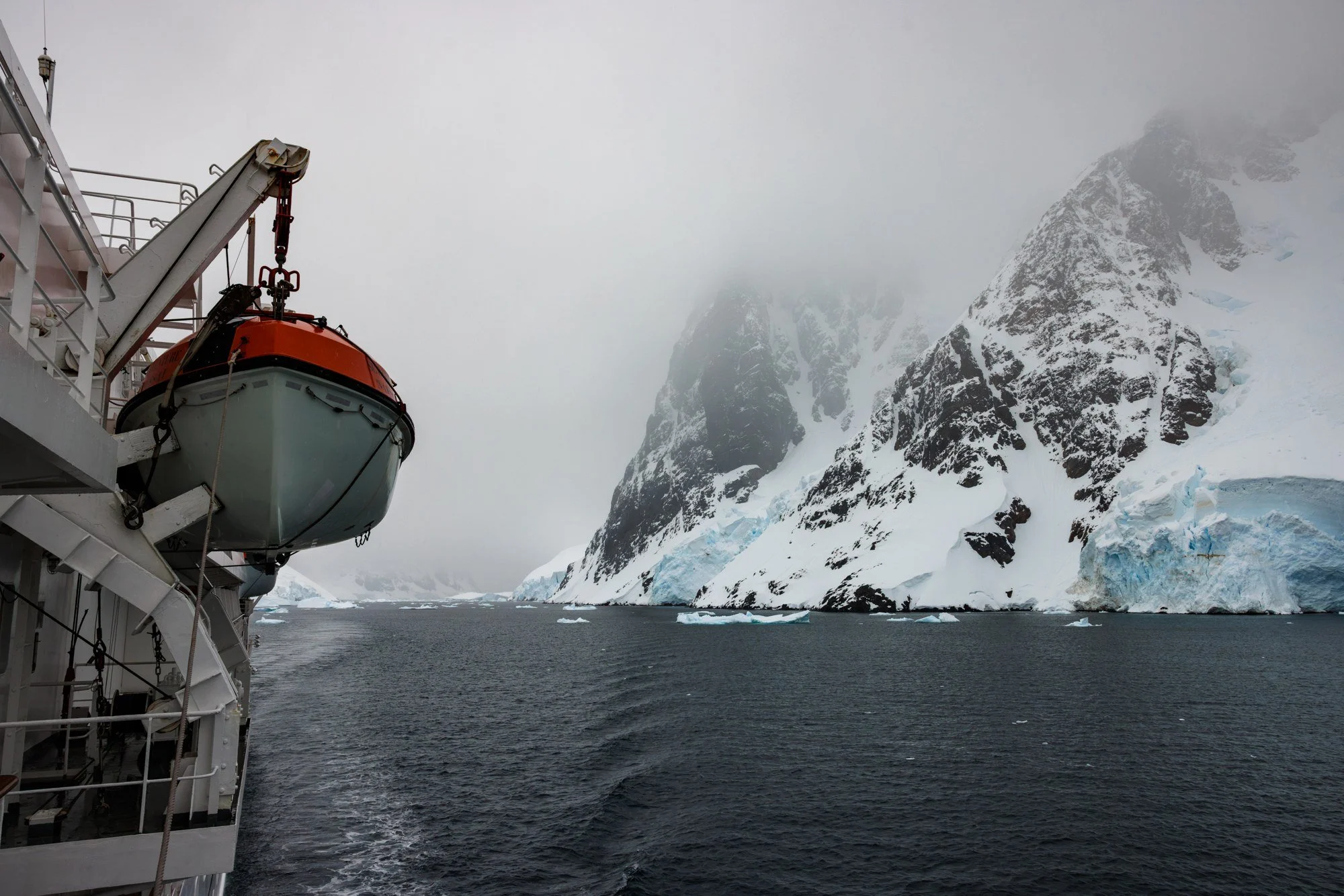
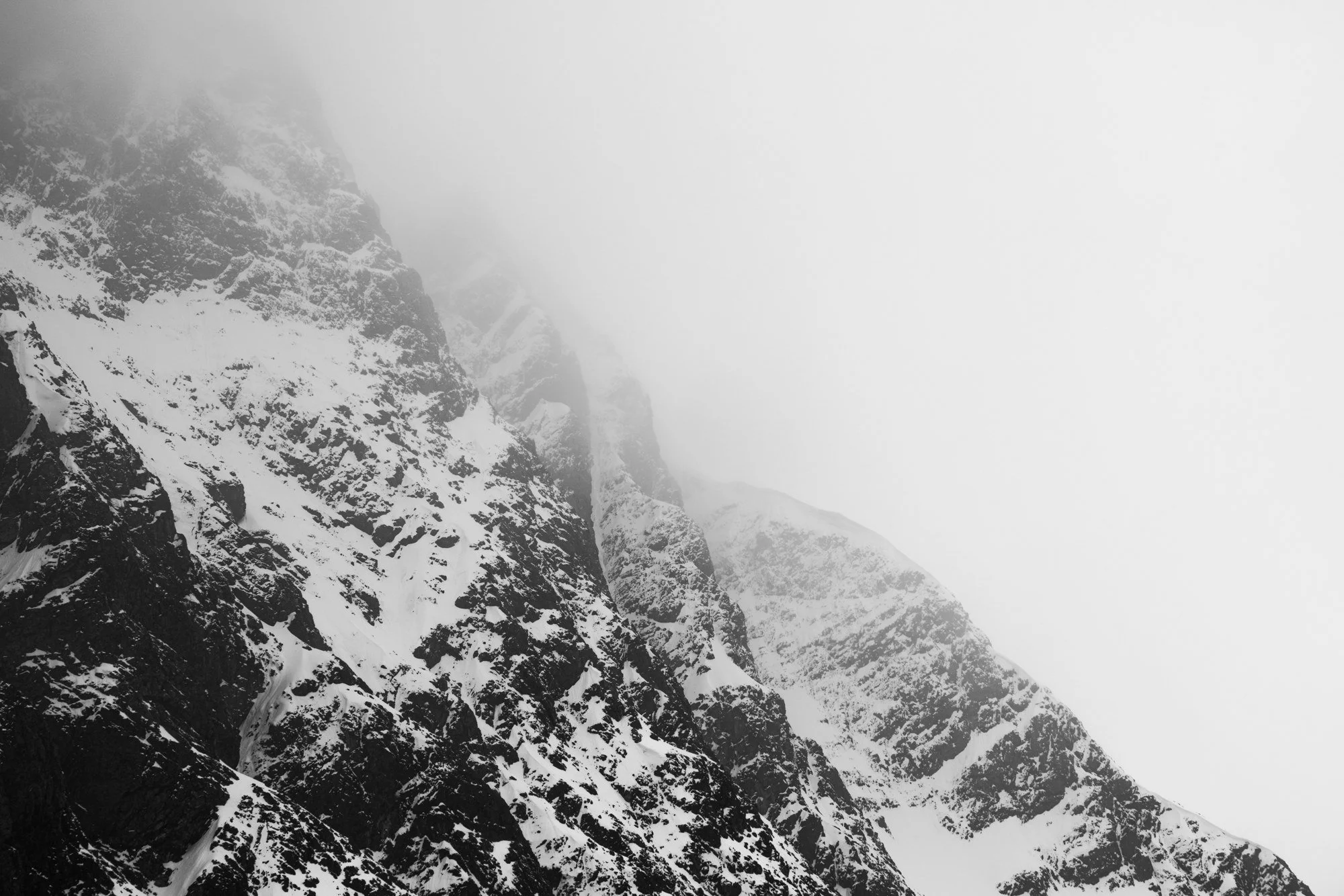
He described how much changes between voyages, and even within an hour. Wind and current move the ice. The surroundings shift. Coming back to a familiar place doesn’t mean finding it as he left it.
“It’s not even from year to year. It’s actually from cruise to cruise.”
There is another part of the job Arsen is conscious of: how much this voyage can mean to the people aboard.
When I asked what he hoped guests would take home, he talked about people who had dreamed of Antarctica since childhood, and people who had saved for years to get here. For some, this is the trip of a lifetime. Bad weather can mean losing an experience they have imagined for a very long time.
He understood that disappointment. He also returned to the fact that the conditions cannot be controlled. It was the same reality he had described in the Lemaire, now seen through the expectations of the people travelling with him.
By the time we spoke, Arsen was ready to go home. I asked whether he would miss Antarctica.
Yes, he said. But he needed a break. While he is here, most of his attention goes to the work. He described how little time that could leave to take in the surroundings.
“In between duties we have a little bit of time to enjoy the nature itself.”
He spoke plainly about the pressure and the skills the job requires. After a few months away, he thought, he would be ready to return.
I keep coming back to that photograph of him at the window. On its own, it shows a calm captain and an iceberg very close to the ship. I remember what was happening beyond the frame: the crew moving between the two sides of the bridge, checking the passage, and me trying to see how we would fit. I remember, too, that low ringing sound, the glances around the bridge, and how composed he seemed within seconds of it.
Arsen was looking out at the same ice. He had a job to do, and he still found it beautiful.
Words and photographs by Andrew Miller. With thanks to Captain Arsen Prostov.